

Is Root Canal Painful? Myths, Facts & What to Expect During Treatment
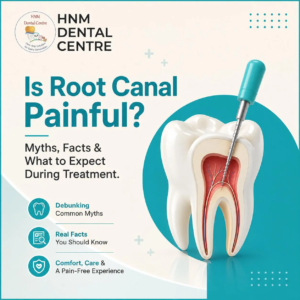 A severe toothache can make even the simplest daily activities difficult. When your dentist recommends a root canal treatment, one of the first questions that probably comes to mind is:
“Is root canal painful?”
The short answer is no. Thanks to modern dental techniques, advanced equipment, and effective local anesthesia, root canal treatment is now a comfortable procedure designed to relieve pain—not cause it.
In this article, we’ll separate myths from facts, explain what happens during the procedure, and help you understand what to expect before, during, and after a root canal.
What Is a Root Canal Treatment?
A root canal is a dental procedure used to treat an infected or damaged tooth. Inside every tooth is a soft tissue called the dental pulp, which contains nerves and blood vessels. When this pulp becomes infected due to deep decay, cracks, trauma, or repeated dental procedures, it can cause severe pain and swelling.
During a root canal, the infected pulp is carefully removed, the inside of the tooth is cleaned and disinfected, and the tooth is sealed to prevent future infection. In most cases, a dental crown is placed afterward to restore strength and function.
The primary goal of root canal treatment is to save your natural tooth and eliminate pain.
Myth vs Fact: Is Root Canal Painful?
Many people believe root canals are extremely painful because of stories they’ve heard over the years. Fortunately, this is one of the biggest myths in dentistry.
Myth:
A root canal is one of the most painful dental procedures.
Fact:
Modern root canal treatment is performed under local anesthesia, making the procedure comfortable and virtually pain-free. Most patients say the discomfort they experienced before treatment was far worse than the procedure itself.
In reality, a root canal helps relieve the pain caused by an infected tooth.
Signs You May Need a Root Canal
Your dentist may recommend root canal treatment if you experience:
- Persistent toothache
- Sensitivity to hot or cold that lingers
- Pain while chewing or biting
- Swollen or tender gums
- A pimple-like bump on the gums
- Tooth discoloration
- Deep tooth decay or infection
If you notice any of these symptoms, don’t delay treatment. Early intervention can save your tooth and prevent more serious complications.
What Happens During a Root Canal?
Understanding the procedure can help reduce anxiety.
Step 1: Examination and X-rays
Your dentist examines the affected tooth and takes digital X-rays to assess the extent of the infection.
Step 2: Local Anesthesia
The treatment area is completely numbed using local anesthesia to ensure your comfort throughout the procedure.
Step 3: Removing the Infection
A small opening is made in the tooth, and the infected pulp is carefully removed.
Step 4: Cleaning the Root Canals
The canals are cleaned, shaped, and disinfected to remove bacteria.
Step 5: Filling and Sealing
The cleaned canals are filled with a biocompatible material and sealed to prevent reinfection.
Step 6: Final Restoration
In many cases, a dental crown is placed to strengthen and protect the treated tooth.
Does a Root Canal Hurt After the Procedure?
It is normal to experience mild tenderness or sensitivity for a day or two after treatment. This discomfort is temporary and usually improves with prescribed or over-the-counter pain medication.
Most patients can return to their normal routine within a day.
If you experience severe pain or swelling that lasts several days, contact your dentist for evaluation.
Benefits of Root Canal Treatment
Choosing a root canal instead of extracting the tooth offers several advantages:
- Saves your natural tooth
- Eliminates infection and pain
- Restores normal chewing ability
- Prevents neighboring teeth from shifting
- Preserves your natural smile
- Avoids more complex tooth replacement procedures
Whenever possible, saving your natural tooth is always the preferred option.
Root Canal vs Tooth Extraction
Patients often wonder whether they should remove the tooth instead.
While tooth extraction may be necessary in certain situations, dentists generally recommend saving the natural tooth whenever possible.
| Root Canal | Tooth Extraction |
| Saves your natural tooth | Removes the tooth completely |
| Maintains normal chewing | May require an implant or bridge later |
| Preserves jawbone health | Bone loss can occur over time |
| Long-term solution | Replacement treatment may be needed |
Your dentist will recommend the best treatment based on the condition of your tooth.
Tips for Recovery After a Root Canal
Following these simple steps can help ensure a smooth recovery:
- Avoid chewing on the treated tooth until your permanent restoration is placed.
- Maintain good oral hygiene by brushing and flossing regularly.
- Take prescribed medications as directed.
- Avoid very hard or sticky foods for a few days.
- Attend your follow-up appointments.
Frequently Asked Questions
How long does a root canal take?
Most root canal treatments are completed in 60 to 90 minutes, although complex cases may require more than one visit.
Can I eat after a root canal?
Yes. Wait until the numbness wears off before eating, and avoid chewing on the treated side until your dentist advises otherwise.
Is root canal treatment safe?
Yes. Root canal treatment is a safe and highly successful procedure with an excellent long-term success rate when performed by an experienced dentist.